September 16, 2026
Fax From Your Phone: Four Ways, No Machine
You cannot send a traditional fax to a regular cellphone number the way you’d send a text message. A fax carries a modem signal that a phone’s SMS network can’t decode. What you can do is use your phone to send and receive real faxes through a mobile fax app, a web fax service, an email-to-fax gateway, or fax-to-email forwarding. Each option comes with delivery confirmation, and most charge either per page or through a subscription.
TL;DR:
- Sending a fax to a cell phone requires using dedicated software or services that route the fax through VoIP or FoIP gateways since SMS networks cannot decode fax modulations.
- For one-off pages, mobile fax apps or online web services are the fastest, most straightforward options, with confirmation and retries included in most paid plans.
- Receiving a fax on your phone depends on virtual numbers and email forwarding, which convert incoming calls into files accessible via email or apps, suitable for regular or urgent inbound fax needs.
- Faxing fails automatically if you try to send a traditional fax directly to a cellphone number due to incompatible signaling, unless routed through a VoIP or fax gateway.
- When choosing a mobile fax service, prioritize encrypted transmission, delivery confirmation, and support for archiving legal documents, especially if handling sensitive material.
Can You Fax to a Cell Phone? The Four Practical Methods
The short answer is that “faxing to a cell phone” really means routing a fax through software that turns your phone into a substitute fax machine. Four approaches cover almost every situation:
- Mobile fax apps let you scan a document with your camera and send it straight to a fax number, which makes them the fastest choice for a one-off page. Smartphones can fill in for a physical fax machine once you pair the camera with the right app.
- Web/online fax services work entirely in a browser, so there’s nothing to install if you’d rather not add another app to your phone.
- Email-to-fax gateways send a fax by attaching a document to an email addressed to a special fax number domain, which fits naturally if you already manage documents through email.
- Printer or MFP mobile apps connect your phone to an office multifunction printer, useful when you have hardware nearby but want to trigger the send from your phone.
How Do You Send a Fax From Your Phone Step by Step?
The workflow is nearly identical no matter which method you pick.
- Scan the document. Use your phone’s camera or a built-in scanner app to create a clean PDF. Lay pages flat, use good lighting, and check that multipage documents are in the correct order before saving.
- Pick your send method. Decide whether you’re entering a standard fax number with country code into an app, uploading the file to a web fax service, or addressing an email to a fax-gateway address.
- Attach and send. In an app, tap to attach your scan and confirm the recipient number. On the web, upload the PDF and enter the number in the send form. Over email, attach the file and hit send like any other message.
- Confirm delivery. A reliable service sends a confirmation once the fax reaches the recipient’s machine, and retries automatically if the line is busy. If a fax fails, check the number format and resend.
Pro Tip: Save your scanned document as a PDF rather than a single image file. PDFs preserve page order and resolution better across different fax gateways, which cuts down on garbled or rejected pages.
For a fuller walkthrough with screenshots for both iOS and Android, see this step-by-step mobile fax guide.
How Do You Receive a Fax on Your Cell Phone?
Receiving works differently than sending, since your phone has no way to answer an incoming fax call on its own. The fix is a virtual fax number that intercepts the call and converts it into a file.
- Virtual fax numbers accept the incoming fax on your behalf and forward the resulting document to an app or your email inbox.
- Fax-to-email forwarding is the most common setup: once the fax arrives, you get a notification with the document attached as a PDF or TIFF, readable on any phone. Fax-to-email is typically how receiving works when a mobile setup replaces a physical machine.
- Temporary numbers suit a single expected fax, while permanent numbers make sense if you receive faxes regularly and want one address people can reuse. Some services provide virtual numbers as a paid add-on for ongoing inbound use.
- Before you rely on a number, check that the app handles archiving so old faxes stay searchable, and confirm the file opens correctly on your phone’s default PDF viewer.
Why Doesn’t Fax Work Like SMS on a Cell Phone?
A fax machine sends a modem signal over a telephone line, essentially an analog handshake between two devices agreeing to exchange a page image. A cell network’s SMS channel carries short text packets over data infrastructure that has no concept of that handshake, which is why dialing a cellphone number from a fax app simply fails or errors out. Modern fax apps solve this by routing your upload through a FoIP or VoIP gateway that converts the file into the analog signal a receiving fax machine expects.
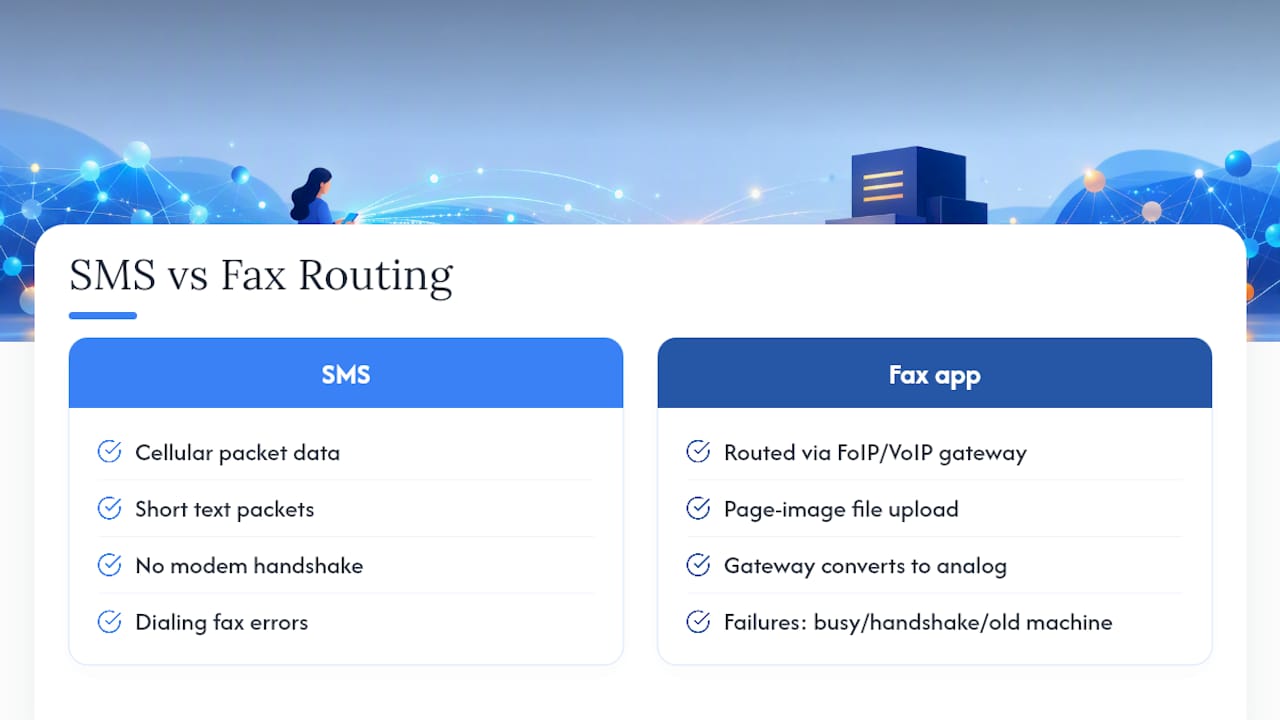
Sometimes a fax still won’t go through even to a legitimate fax number. Busy signals, handshake errors, or an outdated machine on the receiving end are the usual culprits. If a send fails, try lowering the image resolution, resaving as a standard PDF, or resending outside business hours when the recipient’s line is less likely to be busy. Some guides suggest emailing a fax gateway address directly, though that route carries its own compatibility quirks and rarely gives you a delivery receipt.
What Should You Check Before Choosing a Mobile Fax Service?
Pricing for mobile fax tools generally falls into three shapes: pay-per-page for occasional senders, monthly subscriptions for frequent users, and prepaid credit bundles that sit somewhere in between. If you only send a fax a few times a year, a subscription rarely pays for itself.
Security matters just as much as price, especially for tax forms, contracts, or medical records. Look for:
- Encrypted transmission (TLS/HTTPS) so the file can’t be intercepted in transit
- Encryption at rest for anything stored temporarily on the provider’s servers
- A delivery confirmation or receipt for every fax sent
- An automatic retry policy for busy or failed lines
- Support for archival-quality PDFs, which matters for legal and IRS submissions
Occasional senders typically do better with per-page pricing than a subscription, since a handful of urgent faxes a year rarely justifies a recurring plan.
Which Method Should You Actually Use?
For a single urgent page, a browser upload or pay-per-use app beats installing new software you’ll rarely open again. If you expect recurring inbound faxes, a virtual number with email forwarding saves you from checking an app constantly. Sensitive or legal documents deserve a service with encryption and delivery confirmation, full stop. Whatever method you choose, scan flat, use good light, and save as PDF before sending.
— Engin
Send a Fax From Your Phone With PerPageFax
Some online fax services offer an alternative to juggling apps and subscriptions when all you need is one fax sent right now. There’s no account to create and no monthly plan to remember to cancel: you pay per page, upload a PDF or a camera scan, and the service handles delivery with encryption and automatic retries if the line is busy.
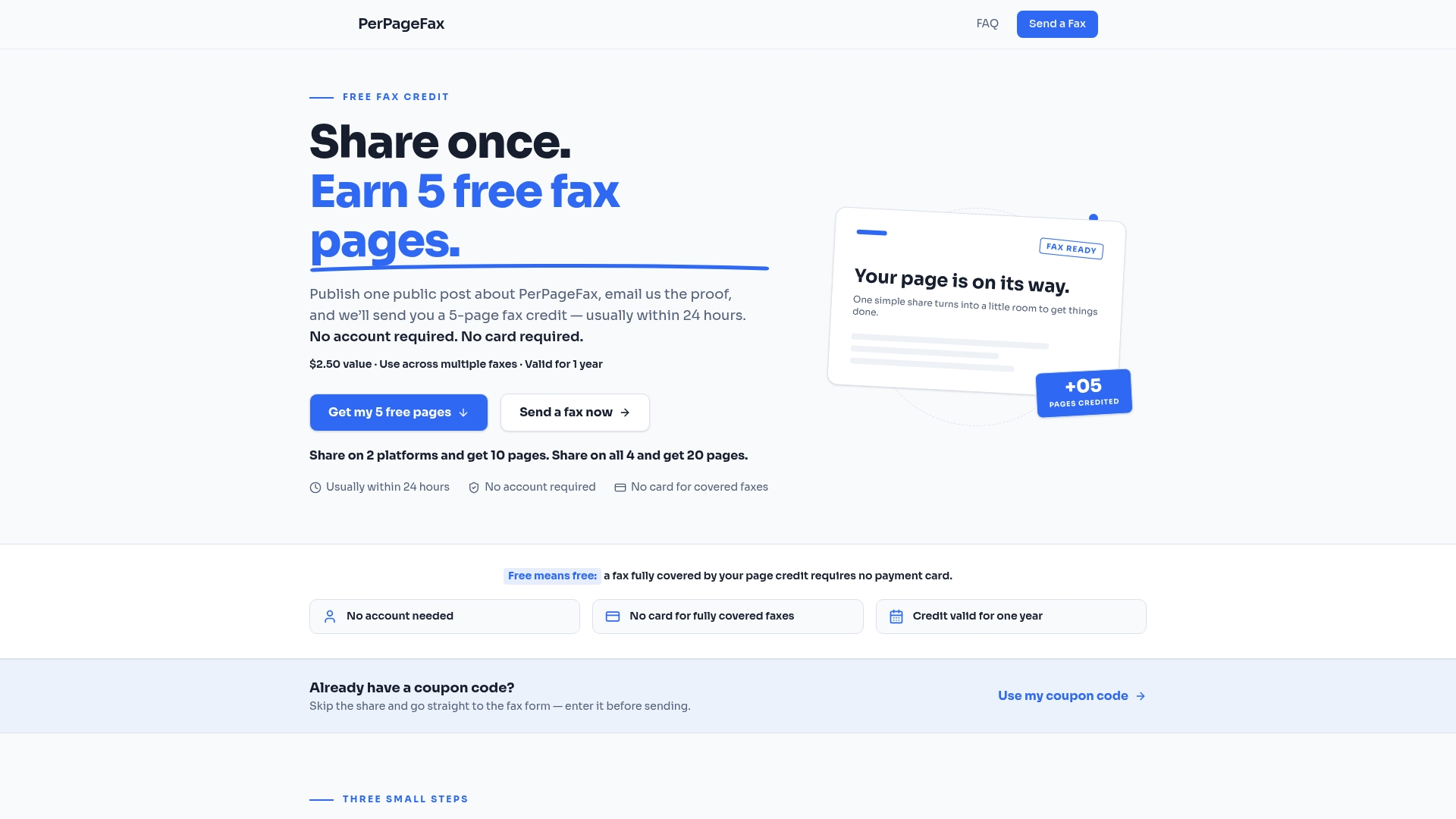
From your phone, the process takes minutes. Snap a photo of your document or use the free tool to faxify a PDF so it’s properly formatted before sending, add a cover sheet if the recipient needs one, and upload it directly through your mobile browser. You’ll get delivery confirmation once the fax goes through, so there’s no guessing whether an IRS form or a signed contract actually landed. If you’re not ready to send yet, browse the free PDF and fax tools to prep your document first, or head straight to PerPageFax to send your next fax now.
Sources
For more detail on mobile-first fax workflows, the Verizon guide to faxing from a phone covers app-based sending well, while the HP Support Community thread on cell phone faxing walks through MFP-connected setups. For sending without any hardware at all, see how to fax without a fax machine.
- How to Send a Fax from Your Phone
- Can I use a cell phone send/receive fax? - HP Support Community
- Simple Fax-Send Fax from Phone - Apps on Google Play
- How faxing from a phone works and why apps eliminate old limitations
FAQ
Can I Send a Fax via Gmail?
Yes, if the recipient’s fax service accepts email-to-fax delivery, you can attach your document to a Gmail message and send it to their fax gateway address. This method works, but it typically lacks the automatic retries and delivery confirmation you’d get from a dedicated fax service or gateway.
How Can I Send a Fax Without a Landline for Free?
Some fax apps offer a limited number of free pages through a trial, but ongoing free sending is rare since fax delivery costs money to route through phone networks. Pay-per-use services with flat per-page pricing and no account required are usually cheaper than a subscription for occasional sends.
What Happens if I Send a Fax to a Phone Number?
The call will fail or the fax modem tone won’t be recognized, because a cellphone’s SMS and voice channels aren’t built to interpret an analog fax handshake. You need a real fax number, either a traditional line or a virtual fax number set up to receive faxes.
Is Google Fax Free?
There’s no dedicated free fax product from Google. Some third-party apps let you route a fax through a Gmail-connected gateway, but pricing and reliability vary by provider, so check delivery confirmation and per-page costs before relying on any free option for anything time-sensitive.
Recommended
Ready to send a fax?
Send your fax online in minutes for $0.50/page — no account needed.
Send a fax now