September 12, 2026
Color Fax: 3 Outcomes, Test Before You Send
Yes, color faxing exists, but it only reliably works when both the sending and receiving devices support color transmission and the network path preserves color data. Most consumer and business fax traffic still defaults to black and white. If you need guaranteed color, test the connection first or use a secure digital alternative instead.
TL;DR:
- Color fax transmission depends on both devices supporting color modes and a network path that preserves color data without degradation.
- Most consumer and business fax lines default to black and white, and VoIP networks often introduce compatibility issues that block color transmission.
- Testing with a single-page color fax beforehand can prevent wasted pages, but success still hinges on device, network, and file quality.
- Sending color faxes via analog machines relies on recipient support and often results in downsampled, lower-resolution images around 200 dpi.
- Digital and online fax services reduce some risks by handling files digitally, but they may downsample colors and still require confirmation of support at both ends.
Can You Fax In Color? How the Technology Actually Works
Color fax is not a separate machine or a separate phone line. It is an extension of the same fax protocol that has moved black and white documents since the 1980s. The ITU-T T.30 recommendation sets the baseline rules for how two fax devices negotiate a connection, and later extensions to that standard added support for color facsimile using JPEG-based encoding.
Color data is heavier than black and white data, and that creates real trade-offs. Early technical work on color facsimile hardware and software describes methods like Mixed Raster Content, which separates a page into text and image layers so each compresses differently. That approach keeps file sizes manageable, but it also means many devices cap color scans at 200 by 200 dpi rather than the sharper resolutions available for text faxes.
Backward compatibility is built into the handshake. If a receiving machine cannot process color, the sending device typically falls back to standard black and white mode automatically, so the transmission still completes. It just will not look like the original.
What Compatibility Issues Should You Check First?
Before you send a fax machine color document, confirm the recipient’s equipment actually supports color reception. Many multifunction printers and fax services still ship with color transmission disabled or unsupported by default, even when the marketing materials mention color scanning.
A few practical realities shape whether your color fax survives the trip intact:
- The receiving device must explicitly support color facsimile modes; without that, the fax converts to grayscale or black and white on arrival.
- Some manufacturers use partial or proprietary color implementations, so success rates improve when sender and recipient run the same brand or the same online fax service, according to vendor support guidance on color transmission.
- VoIP phone lines complicate things further. Missing Error Correction Mode or poor call termination can block a color fax even when both machines technically support color, per network requirement documentation for color faxes.
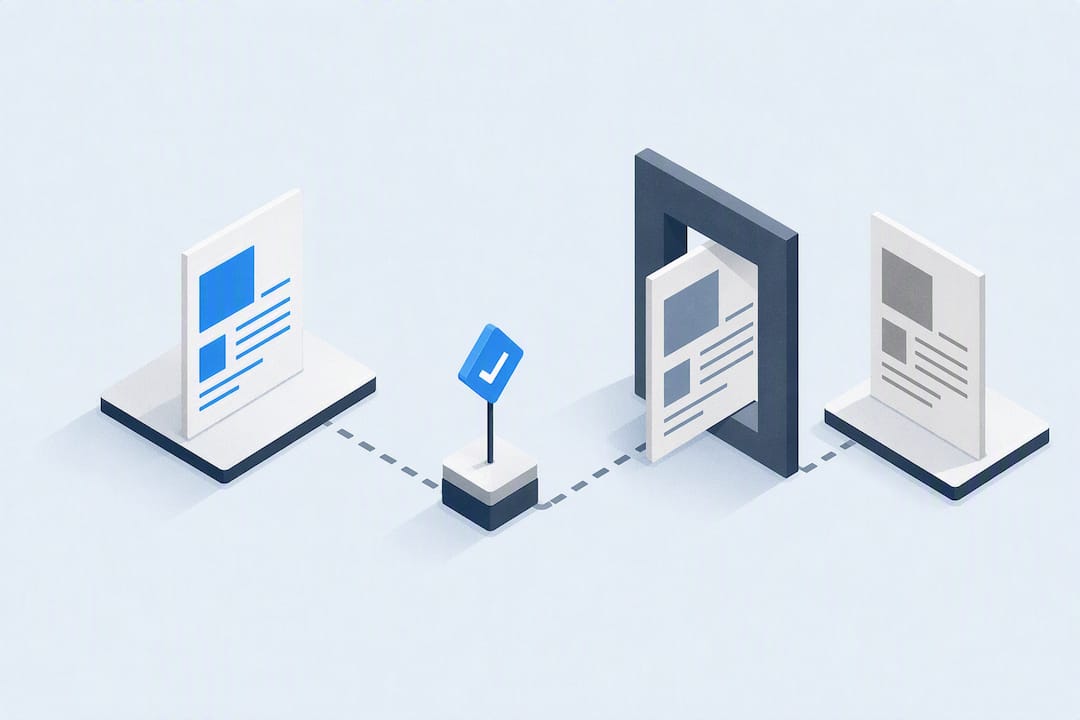
- Expect one of three outcomes when compatibility is uncertain: full color delivery, automatic grayscale fallback, or a hard conversion to black and white with no warning.
Given that unevenness, the safest working assumption is that any given fax will arrive in black and white unless you have already confirmed color support on both ends.
How Do You Send a Color Fax? Device and Software Options
You have three realistic paths for sending color faxes, and each carries a different compatibility risk.
Color-capable multifunction printers remain the most direct route. On models from Canon and similar manufacturers, you select a color transmission mode from the operation panel before dialing, but the printer scans the original at a fixed resolution regardless of image complexity. The catch is that analog transmission over standard phone lines still depends entirely on the recipient’s fax machine supporting color, so a correctly configured sender guarantees nothing on its own.
PC fax software and fax modems work through a virtual printer driver, letting you fax directly from a Word document or PDF. Some Windows-based fax programs advertise full color support with preview and markup tools, but the transmission still lives or dies on what the receiving device can decode.
Online fax services often handle color more gracefully because they process files digitally before transmission, avoiding some of the scan-quality loss of analog machines. Even so, many services downsample color images to save bandwidth, and service-to-service compatibility tends to outperform mixed setups.
A short pre-send routine saves you from surprises:
- Confirm the recipient’s device or service explicitly supports color fax reception.
- Send a single test page before committing a full multi-page document.
- Add a note on your fax cover sheet asking the recipient to confirm whether the page arrived in color.
Getting the Settings Right: Resolution, Network, and File Prep
Getting a color fax through in usable condition comes down to three adjustable factors: scanner settings, network configuration, and how you prepare the file beforehand.
- Set the scanner to color transmission mode, not just color scanning. Canon documentation for models like the MX432 confirms that color originals typically scan at 200 by 200 dpi, so switching to a Photo or Extra Fine setting will not exceed that ceiling on most consumer hardware.
- Enable ECM on your fax line or VoIP adapter, and where possible, choose T.38-capable termination instead of routing fax calls over standard G.711 voice codecs, which frequently drop color transmissions partway through.
- Clean up the source file first. Crop unnecessary white space, boost contrast on scanned photos, and save as high-quality JPEG or multi-page TIFF if your device supports those formats for fax transmission.
- If a fax fails or arrives washed out, resend a single page, ask the recipient for their exact device model, and switch to a secure digital transfer if color still will not hold.
Pro Tip: Call the recipient before a large color job and ask them to send you a one-page test fax back. If their reply arrives in color, you know the full path supports it; if it doesn’t, save yourself the wasted pages and switch methods.
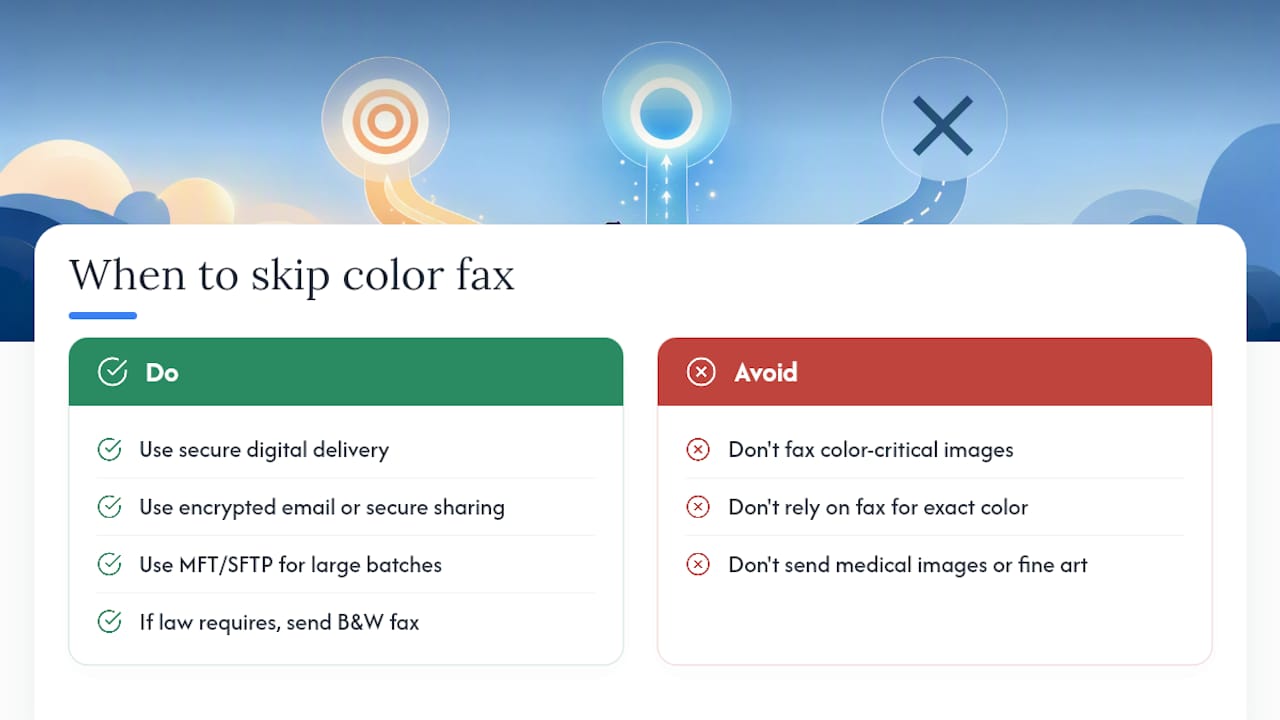
When Should You Skip Color Fax Entirely?
Some documents simply should not travel by fax, color or otherwise. Medical imaging, fine art reproductions, and any graphic where exact color accuracy matters will lose fidelity to compression no matter how well your equipment is configured. Practitioners in these fields typically recommend secure digital delivery instead of relying on fax lines for anything color critical.
Encrypted email and secure file sharing platforms preserve full resolution and color depth, though they require the recipient to access a link or portal rather than a familiar fax number. Managed file transfer and SFTP work well for larger batches but add setup overhead that a single urgent document rarely justifies.
When a fax is legally required despite the color limitation, send the standard black and white fax to satisfy that requirement, then upload the color original through a secure digital channel and reference the upload on your cover page.
What This Means for How You Should Actually Send Documents
Most guides treat color faxing as a settings problem: flip the right toggle, pick the right resolution, and you are done. That undersells how much of the failure rate comes from the network path itself rather than the machines on either end. A sender and recipient can both own color-capable hardware and still get grayscale garbage because a VoIP carrier silently dropped ECM somewhere in the middle. That is not a user error. It is an infrastructure gap most people never think to check.
The more useful mindset is to treat color fax as a bonus outcome, not a baseline expectation. Confirm it works before you depend on it, and build a fallback into your workflow every time.
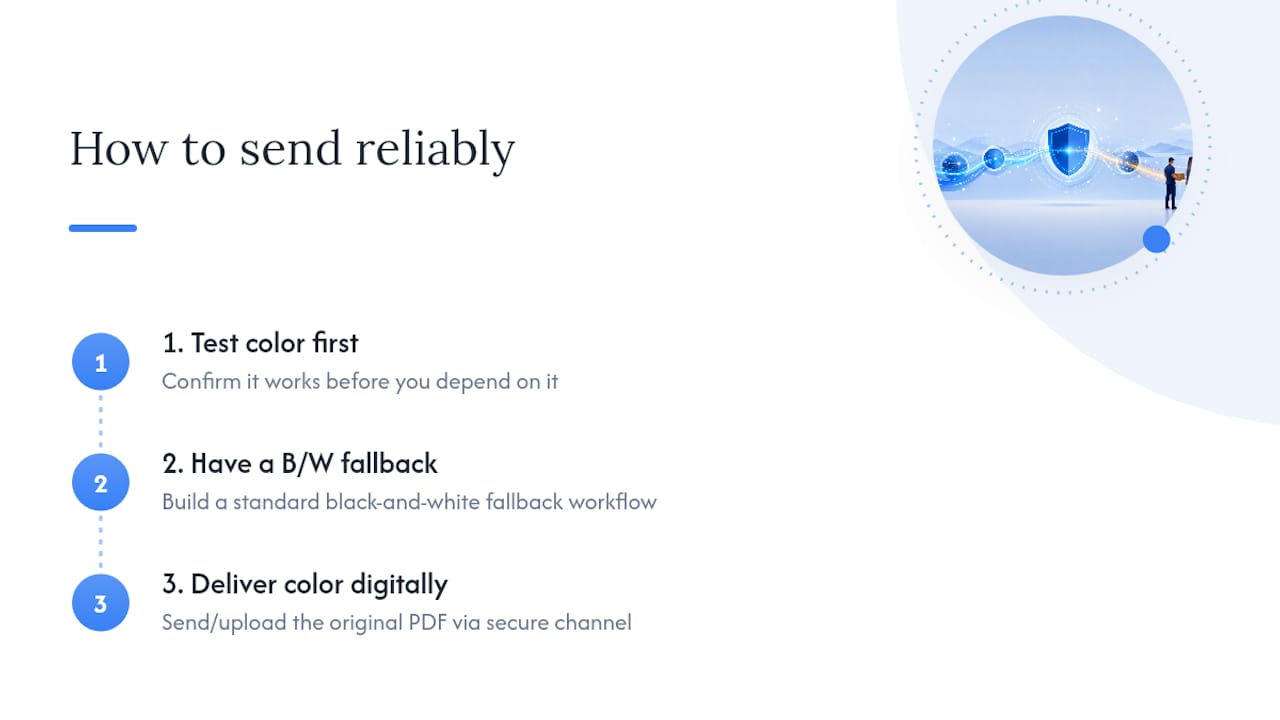
Online fax services help here because they remove one variable entirely: you are no longer trusting an aging analog phone line to carry color data across town. Preparing files as clean, well-formatted PDFs before faxing also cuts down on the compression artifacts that make marginal color transmissions look worse than they need to.
Perpagefax was built around the reality that most fax needs are urgent, one-time, and document-heavy rather than color-critical. Sending without an account, paying $0.50 per page, and getting delivery confirmation on every transmission means you know immediately whether a fax actually reached its destination instead of guessing. Automatic retries and a refund policy on failed faxes remove the guesswork that analog machines leave you with.
— Engin
Test Your Next Fax With Perpagefax First
If you have read this far, you already know that color fax reliability depends on factors outside your control, so the smartest move is testing before you commit to a full document. This online fax service lets you send a fax without creating an account, at a flat per-page rate, with encryption and delivery confirmation on every transmission.

Send a single test page through the online fax landing page and check whether your recipient confirms color or black and white on arrival. If your document needs cleanup first, run it through the free faxify tool to get it fax-ready in seconds, no software installation required. Automatic retries and refunds on failed faxes mean a bad connection costs you nothing but a few minutes.
Sources
For readers who want the primary references behind color fax behavior: the ITU-T T.30 recommendation covers the transmission standard itself, Canon’s support documentation explains device-level resolution behavior, and VoIP network requirements for color faxes details the network configuration that determines whether color survives the call.
- ITU-T Recommendation T.30 — Procedures for document facsimile transmission in the general switched telephone network
- Send Fax From the Operation Panel - MX490 or MX492 Printer
- VoIP Network Requirements for Color Faxes
- An introduction to color facsimile: hardware, software, and standards (1996)
- Is it possible to send my fax in color? Why are my faxes being transmitted in black and white?
FAQ
Does Color Fax Exist?
Yes, color fax exists as an extension of standard fax protocols, but it requires both the sending and receiving devices or services to support color transmission modes.
Can a Fax Be Sent in Color?
A fax can be sent in color only when the recipient’s machine or service explicitly supports color reception; otherwise it converts to grayscale or black and white automatically.
What Is the Best Free Color Fax App?
Free options vary in reliability, but pay-per-use services like Perpagefax remove account setup entirely and charge $0.50 per page only when you actually send, which suits occasional color fax needs better than a subscription tool.
What Does a Fax Look Like When Sent in Color?
A successfully transmitted color fax looks like a compressed, lower-resolution version of the original, typically scanned at 200 by 200 dpi, with visible softness compared to a printed photo or digital scan.
Recommended
Ready to send a fax?
Send your fax online in minutes for $0.50/page — no account needed.
Send a fax now