September 14, 2026
Fax a PDF in Under a Minute: $0.50 Per Page
To fax a PDF, upload the file to an online fax service or attach it to an email-to-fax address, enter the destination fax number, and hit send. The upload and send process typically takes under a minute. Once transmission finishes, check for a delivery confirmation with a timestamp. That confirmation is your proof the document arrived.
TL;DR:
- Online fax services like PerPageFax offer a quick, no-account way to send PDFs for $0.50 per page with TLS encryption and delivery confirmation.
- For best results, convert documents to PDF at 300 DPI in black and white, and split oversized files to ensure clarity and legibility.
- Double-check the recipient’s fax number and include a cover sheet with sending details to prevent transmission errors or confusion.
- Using email-to-fax requires correct formatting of the email address, and testing with a single-page fax can prevent time-sensitive errors.
- Fax failures are most often caused by incorrect numbers, blurry scans, rejected attachments, or delays on the recipient’s end, which often resolve with retries or verification.
How Do You Fax a PDF? Choosing the Right Method
The right way to fax a PDF depends on your device, how often you send faxes, and whether you need documentation for legal or tax purposes. Five methods cover nearly every situation.
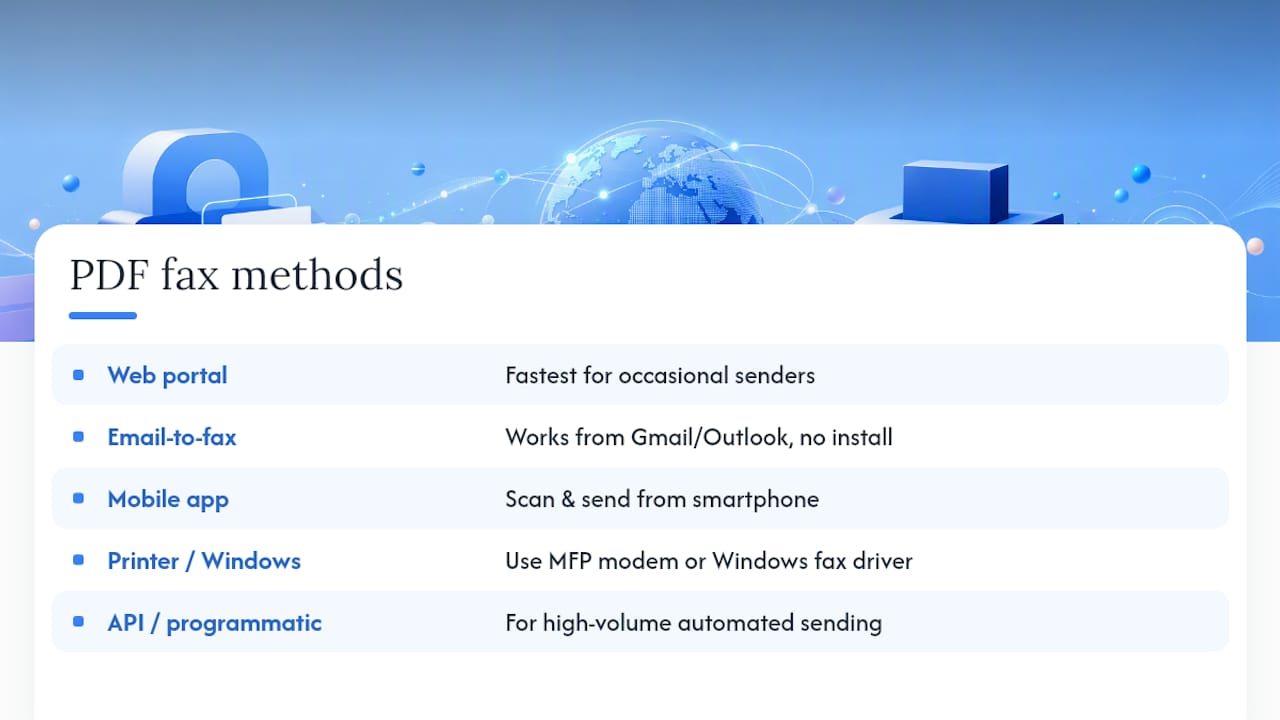
Web portal (best for occasional senders). You visit an online PDF fax service, upload your document, type in the recipient’s fax number, and click send. No fax machine, no phone line, no account setup in most cases. This is the fastest route if you fax a PDF once a month or less.
Email-to-fax (best if you live in your inbox). Many fax providers assign you or the recipient a special email address tied to a fax number. Attach your PDF to a message addressed to something like [faxnumber]@provider.com, and the service converts and transmits it automatically. This works well from Gmail or Outlook without installing anything extra.
Mobile apps and phone scanning. If you only have a smartphone and a paper document, a fax app lets you photograph the pages, auto-crop them into a clean PDF, and send directly from your phone. This solves the problem of needing to fax something while away from a computer or scanner.
Scanner, printer, or Windows Fax integration. Some multifunction printers include built-in fax modems, and Windows itself supports an internet-fax driver for users who print directly to a virtual fax device. Microsoft documents this workflow for Windows and Office users who want to send a fax from a Windows PC without third-party software, including how to install the fax driver and generate cover sheets in Word for the web.
API and programmatic faxing. Developers building fax
capability into an app or internal tool can send PDFs through a fax API using a media URL or
multipart file upload. A request typically returns an HTTP 202 response, then reports
transmission status through webhook events like fax.delivered or fax.failed, according to Telnyx’s programmable fax documentation. This is overkill for a single document but makes sense for businesses faxing hundreds of
PDFs a month through automated workflows.
Pick based on frequency and hardware, not habit. Someone who faxes twice a year gains nothing from installing a Windows fax driver; someone processing insurance claims daily gains a lot from an API integration.
Step-by-Step: How to Send a PDF by Fax Online
Whether you’re using a web portal or email-to-fax, the underlying sequence is the same. Follow these steps in order:
- Prepare the file. Convert your document to PDF if it isn’t already, and double-check page count, page order, and that nothing is cut off at the margins.
- Enter the recipient’s fax number. Include the country code for international sends. A dropped digit is the single most common reason faxes fail to connect.
- Add a cover page if needed. Include your name, the recipient’s name, and a short message. Many providers let you build one in seconds rather than typing it into the PDF itself.
- Upload or attach the PDF. Preview the pages before sending to catch upside-down scans or missing pages.
- Send and watch the status. Fax transmission runs over telephone infrastructure, so a multi-page document can take several minutes rather than transmitting instantly.
- Save the delivery confirmation. Screenshot or download the confirmation with its timestamp, especially for anything tied to a legal deadline or tax filing.
For email-to-fax specifically, the syntax matters. A typical address format looks like 18005551234@yourprovider.com, with the fax number (often including country and area code, no dashes or spaces) as the
local part of the address. The most common pitfalls: attaching a scanned image instead of a
proper PDF, forgetting the fax number entirely, or sending from an email account the provider
hasn’t recognized or authorized. Read your provider’s exact format before your first send,
since one wrong character in that address sends your fax nowhere with no error message to
explain why.
Pro Tip: Send yourself a one-page test fax before you send anything time-sensitive. It confirms your account, number formatting, and file all work together, and it takes less time than troubleshooting a failed IRS submission an hour before a deadline.
Why PDF Is the Best Format for Faxing Documents
PDF preserves your document’s exact layout, fonts, and page order across any device or fax machine on the receiving end, which is why it’s the format most fax services recommend by default, according to Zoom’s guide to faxing from a computer. Most services also accept Word documents, JPG, PNG, and TIFF files and convert them automatically, but PDF removes a conversion step and the formatting drift that sometimes comes with it.
A few preparation details make the difference between a legible fax and a wasted send:
- Scan at 300 DPI. Zoom’s guide specifically recommends 300 DPI to keep text and fine print readable once the recipient prints it out.
- Choose black-and-white for text documents. It transmits faster and stays sharp; save grayscale or color for anything with photos, seals, or shaded tables.
- Split oversized PDFs. If you only need to send 3 pages out of a 40-page contract, isolate them first. A free tool like PerPageFax’s PDF splitting and prep tool handles this without installing software.
- Sign before you send. If a signature is required, sign the physical page or use a digital signature tool before converting to PDF, not after.
A blank cover page costs you nothing and saves the recipient a phone call asking who sent an unlabeled 12-page document.
Why Did My Fax Fail? Fixing Common PDF Fax Problems
Most fax failures trace back to one of four causes, and each has a quick fix.
- Wrong or unreachable fax number. Double-check every digit and the country code. A busy line or a machine that’s powered off will also trigger a failure notice, and simply retrying a few minutes later often resolves it.
- Blurry or illegible pages on arrival. Increase your scan resolution to at least 300 DPI, convert color scans to monochrome for text-heavy pages, and confirm the page orientation is right-side up before sending.
- Email attachment rejected. Verify the file is actually a PDF and not a renamed image file, and check that it falls under your provider’s file size limit, since email-to-fax gateways often cap attachments smaller than a typical email service allows.
- Fax stuck in “pending” for a long time. Multi-page faxes can legitimately take several minutes because the transmission runs over telephone-line speeds, not internet speeds. Give it time before assuming failure.
If a fax fails twice with the same number using two different formats or DPI settings, the problem is likely on the receiving end, and it’s worth calling the recipient directly rather than repeatedly resending.
PerPageFax: A No-Account Way to Send a PDF Fax
You can send a fax without creating an account or signing up for a subscription, paying a flat rate per page with no hidden fees layered on top. You upload your PDF, enter the destination number, pay for the pages you’re sending, and the transmission goes out. That’s the entire transaction.
On the reliability side, PerPageFax uses TLS encryption during transmission, retries automatically if a line is busy or a receiving machine doesn’t answer on the first attempt, and issues a refund if the fax ultimately fails to deliver. You may receive a delivery confirmation with a timestamp, which functions as an audit trail if you ever need to prove a document was sent by a specific date, such as an IRS form filed close to a deadline.
Beyond sending, PerPageFax offers free tools worth knowing about even if you’re not ready to send yet:
- A faxify tool that converts and prepares any PDF for transmission.
- A PDF splitter for isolating specific pages out of a longer document.
- A cover sheet builder with a live preview before you attach it to your fax.
This setup fits occasional senders, freelancers, and small business owners best: people who need to get one document out today without navigating a monthly plan they’ll use twice a year.
When Online Faxing Makes Sense (And When It Doesn’t)
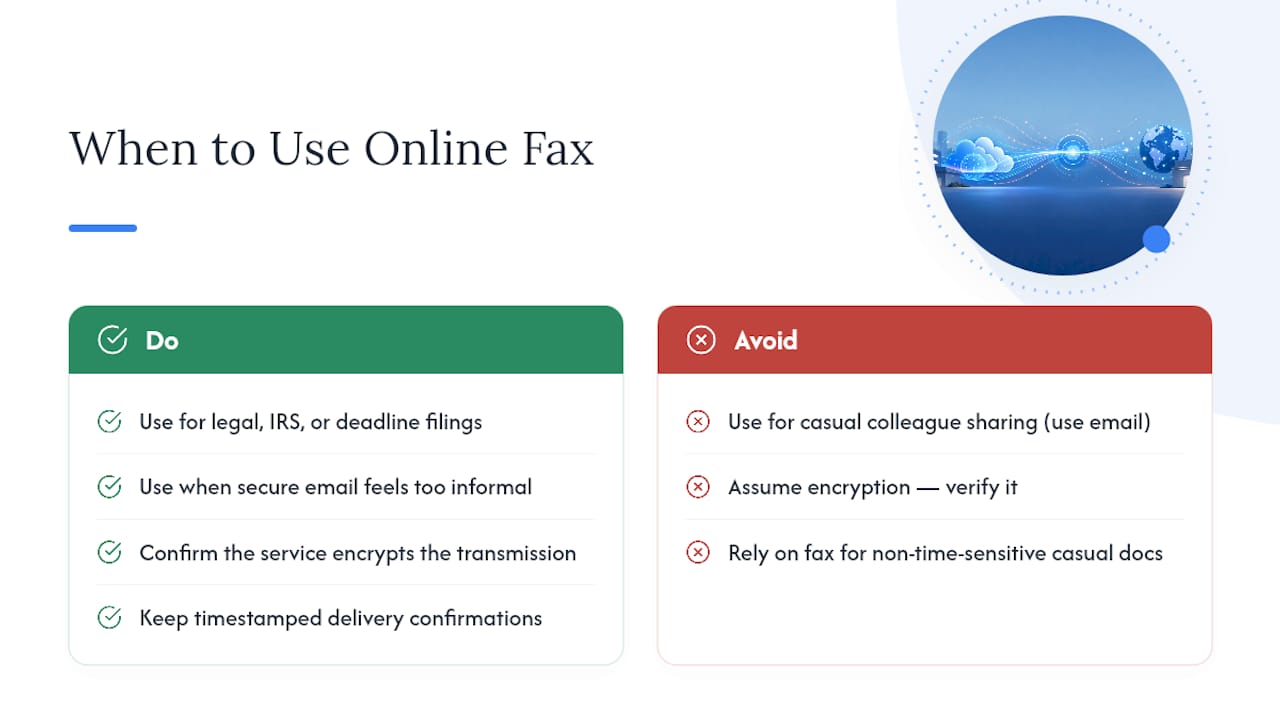
Online faxing earns its place for legal filings, IRS submissions, and anything with a hard deadline where secure email feels too informal and certified mail is too slow. For casual document sharing between colleagues, plain email usually beats it on convenience.
One habit separates people who use fax services well from those who don’t: they treat sensitive documents differently. Encrypted transmission matters more for a signed contract or medical record than for a flyer, so check that whatever service you use actually encrypts the send rather than assuming it. And keep every delivery confirmation you receive. A timestamped record has settled more than one dispute over whether a form arrived before a deadline.
— Engin
Send Your PDF Fax in Minutes With PerPageFax
If everything above sounds like more setup than you want for a single document, PerPageFax skips it entirely: no account, no subscription, just $0.50 per page and a direct path from upload to delivery confirmation.
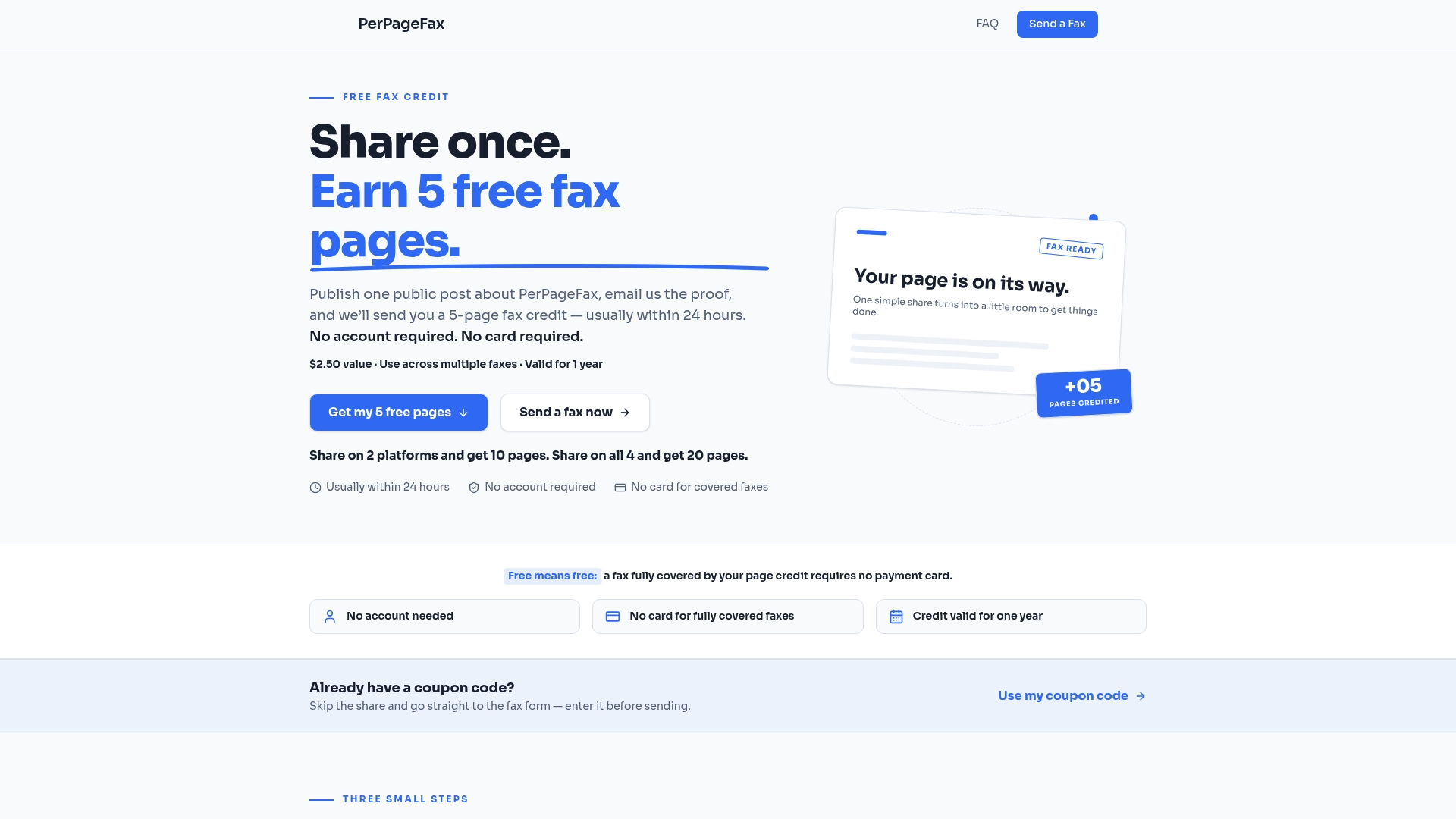
Head to the PerPageFax send page to upload your PDF and enter the recipient’s number, or use the free faxify tool first if your document needs splitting or cleanup before it goes out. Sending internationally? The flat-rate country coverage page lists the 35 countries PerPageFax reaches at the same $0.50-per-page rate. After you send, watch for your delivery confirmation and timestamp. Save it, especially for important or time-sensitive documents.
Sources
- How to fax from a computer: Send documents quickly and securely | Zoom
- Send a Fax via API — Telnyx Programmable Fax API docs
- Install the Windows fax driver or service to use Internet Fax in Office — Microsoft Support
- How to Send a PDF by Fax Online: 2026 Guide | pdfFiller Blog
FAQ
Is It Possible to Fax a PDF File?
Yes. PDF is the format most fax services recommend because it preserves layout and formatting exactly, and nearly every online fax provider accepts PDF uploads directly.
How Can You Fax a PDF for Free?
Some providers offer a limited number of free pages or trial sends, and free PDF preparation tools like PerPageFax’s faxify and split tools cost nothing even though the actual fax transmission through PerPageFax runs $0.50 per page.
Can You Fax a PDF From Gmail?
Yes, using email-to-fax. Attach your PDF to an email addressed to your fax provider’s designated address, usually formatted with the recipient’s fax number as the username, and the service converts and transmits it automatically.
How Do You Fax a PDF From Your Computer?
Upload the PDF through a web-based fax portal, enter the recipient’s fax number, and send. This requires no fax machine or landline, since the service converts your file and transmits it over the phone network on your behalf.
Recommended
Ready to send a fax?
Send your fax online in minutes for $0.50/page — no account needed.
Send a fax now