September 11, 2026
No Fax Machine? Get a Fax Transmission Report
A fax transmission report is the machine or service-generated receipt confirming that your document reached the receiving fax device. It lists the recipient number, date and time, page count, duration, and a status code showing success or failure. Print or save this record whenever you have a filing deadline, a legal notice, or an audit trail that depends on proof you attempted delivery.
TL;DR:
- Most fax transmission reports include details such as recipient number, date, duration, page count, and success or error status, which is crucial for proof.
- Hardware fax machines often default to printing only error reports, so switching to “On” ensures you have confirmation for all successful and failed sends.
- Online fax services provide digital confirmations that are searchable PDFs or email receipts, simplifying archiving and long-term record-keeping.
- A successful fax report confirms the data transfer between machines but does not guarantee that the recipient reviewed or acted upon the document.
- For high-stakes filings, always print and file the confirmation; for routine sends, digital confirmations suffice, but confirm your policy beforehand.
What Appears on a Fax Transmission Report
Every report follows roughly the same template, even though the exact layout varies by brand. Manufacturer documentation on devices like Brother machines consistently lists the same core fields, because they map to what the fax protocol itself records during the call.
Here’s what you’ll typically find:
- Sender ID: your fax number or name, as programmed into the machine
- Recipient number: the number dialed, sometimes with a saved contact name
- Date and time: when the transmission started
- Duration: how long the call lasted, in minutes and seconds
- Page count: how many pages the machine attempted to send
- Result/status: OK, NG (no good), or a specific error code
Some devices add a thumbnail image of the first page when you enable an image-inclusive reporting option, which helps you confirm you sent the right file. For a batch send to multiple recipients, you’ll usually get a separate broadcast report showing which numbers succeeded and which failed. Watch for one quirk: some machines cap the displayed page count at 99, so a 150-page document might show “99” even though every page transmitted.
How to Print or View a Report on a Physical Fax Machine
Every major manufacturer buries this setting in roughly the same place: a fax or system menu, then a report or print-settings submenu. The labels differ slightly by brand, but the logic is identical across hardware.
- Open the machine’s Menu, then navigate to Fax (or System Settings on some models)
- Select Report Setting or Print Reports
- Choose Transmission to isolate outbound fax reports specifically
- Pick a mode: On, On+Image, Error Only, Error Only+Image, or No Report
- Save the setting, then send a test fax to confirm the new behavior
On Brother-style menus, this path is often written as Menu → Fax → Report Setting → Transmission, and the factory default is usually Error Only, meaning the machine only prints something when a fax fails. That saves paper, but it also means you won’t have a paper record of your successful sends unless you switch it to “On.” Ricoh devices route through a different but parallel path: user tools, then facsimile features, then initial settings, where you can enable a confirmation page the same way. Kyocera panels tend to group this under a similar “Report” or “Fax Settings” heading.
Most machines also let you reprint the last transmission log or scroll through recent send history from the same menu, without resending anything.
Pro Tip: If you send time-sensitive faxes regularly, set your machine to “On” instead of “Error Only” before you need it, not after a missed deadline forces the question.
How Online Fax Services Deliver Confirmations
Online fax platforms replace the printed slip with a digital equivalent that’s arguably easier to manage. Instead of walking to a machine, you check a dashboard or your inbox.
- Sent/Outbox history: most platforms keep a searchable log of every transmission, downloadable as a PDF
- Email confirmations: many services automatically attach a confirmation report to a notification email once the send completes or fails
- Notification settings: some platforms default to alerting you only on failures, so check your settings and enable success notifications if you need a receipt every time
- Format: digital confirmations mirror the same fields as a hardware report, recipient, timestamp, page count, and status
The real advantage is archiving. A digital PDF confirmation is searchable, easy to attach to an email thread, and simple to pull up months later during an audit or dispute, unlike a curling thermal paper slip stuffed in a filing cabinet. If you’re preparing documents for one of these services, a free fax cover sheet builder can help you keep the recipient and page count consistent with what shows up on the confirmation later.
What a Confirmation Proves, and What It Doesn’t
A successful transmission report means the sending machine and the receiving machine completed a handshake and verified the data using CRC (cyclic redundancy check). In plain terms, the electronic transfer worked and the bits arrived intact.
A fax confirmation demonstrates that the electronic transfer to the receiving device succeeded, based on protocol-level verification between the two machines. It does not demonstrate that a human being printed, read, or acted on the document, and it says nothing about what happened to the paper once it left the receiving machine’s tray.
That distinction matters most in legal and regulatory contexts, where a confirmation report is often treated as reasonably strong evidence of transmission but rarely as proof of receipt by a specific person. Courts and legal professionals commonly ask for corroboration, a follow-up phone call, a certified mail backup, or a resend request, when the fax carries real legal weight: a court filing, an IRS submission, a contract deadline. If the stakes are high enough that “probably delivered” isn’t good enough, treat the confirmation as your first piece of evidence, not your last.
Troubleshooting Failed Faxes and Reading Error Codes
Most failed transmissions come down to a handful of repeat offenders, and working through them in order saves time.
- Confirm the basics first: double-check the number, make sure you’re dialing a fax line and not a voice line, and confirm the receiving line isn’t busy or off-hook
- “No fax detected” or similar: usually means the receiving machine didn’t answer as a fax device, try the number again or call ahead to confirm it’s live
- “Negotiation failed”: often a line-quality issue, try setting your machine to a lower transmission speed
- “Communication error”: check for a poor phone connection or interference, and try again from a different line if one is available
- Busy signal: retry after a few minutes, most machines and services will do this automatically for a set number of attempts
If automatic retries keep failing after several attempts, the problem is usually on the receiving end, a paper jam, a full memory, or a disconnected line, and not something you can fix by resending. When a fax fails and matters, print or save the error report immediately, noting the time, the recipient number, and the exact error code. That record becomes useful if you need to prove you attempted delivery or need support troubleshooting the line.
Quick Checklist: Save, Print, and File Your Confirmation
Decide your reporting policy before you’re in a time crunch. Print every confirmation if your business needs a hard paper trail; switch to error-only if volume makes that impractical.
- Set your report policy (On vs. Error Only) based on how often you need proof of successful sends
- Save digital confirmations as PDFs and attach them to the original document you sent
- Log the recipient, timestamp, and any follow-up action, a callback, a resend, certified mail, when the fax is deadline-sensitive
- Store the confirmation and the original document together for audit purposes, not in separate folders
| Situation | Recommended action |
|---|---|
| Routine internal fax | Error-only reporting is fine |
| Legal or IRS filing | Print or save confirmation every time, attach to file |
| Multi-recipient broadcast | Keep the broadcast report showing per-number results |
| Failed transmission | Save error report, retry, escalate if it repeats |
Comparing Report Formats Across Machines and Services
A confirmation from a 2010s-era multifunction printer and one from a modern online fax platform report largely the same underlying facts, but they package that information differently. Hardware machines print a physical slip on thermal or plain paper, formatted in a fixed template the manufacturer chose years ago, recipient, time, duration, page count, and status, usually in a monospace font with minimal styling.
Online services generate a digital document instead, and that format tends to be more flexible. Some platforms render the confirmation as a clean PDF with your account details and a timestamp in a readable layout; others send the same information embedded in an email body with a PDF attachment. The data fields are functionally identical to what a hardware report shows, but digital confirmations often include extra metadata a paper slip can’t, like a unique transaction ID or a direct link back to the sent item in your account history.
Broadcast reporting is where the two diverge more noticeably. On hardware, a multi-number send generates a single report listing every recipient and its individual status, and on many devices this report can’t be turned off even if you’ve disabled standard transmission reports. Online platforms typically show the same per-recipient breakdown, but in a dashboard table you can filter and sort, rather than a single printed page. Neither format is objectively better for legal purposes, what matters is that the fields, recipient, time, page count, and status, are present and legible, whichever format you’re holding.
Legal and Compliance Aspects of Transmission Reports
Fax confirmations carry real weight in business-record contexts, and many industries still lean on fax specifically because it produces this kind of paper trail. Legal, medical, and government offices often accept a fax transmission report as documentation that a filing or notice was sent by a specific deadline, which is part of why fax hasn’t disappeared even as email dominates elsewhere.
That said, a confirmation report is evidence of transmission, not a guarantee of legal delivery in every jurisdiction or every contract. Some contracts and court rules specify exactly what counts as valid notice, and a fax confirmation may need to be paired with a certificate of service, an affidavit, or a follow-up communication to satisfy those requirements. If you’re relying on a fax for a deadline with real consequences, read the specific rule or contract clause governing that filing rather than assuming a confirmation alone settles the question.
Security matters here too. Since a transmission report often includes a recipient’s fax number and sometimes an image thumbnail of a sensitive document’s first page, treat these reports with the same care you’d apply to the underlying document, especially in healthcare, legal, or financial contexts where the report itself could reveal who you’re communicating with. Services that encrypt transmissions add a layer of protection here, similar in spirit to how FIPS 140-2 validated cryptographic modules are evaluated for handling sensitive data securely. If your workflow already involves electronic signatures or document authentication, pairing that process with a reliable e-signature and document workflow can close the gap between “the fax arrived” and “the right person acted on it.”
Archiving and Managing Transmission Reports Long-Term
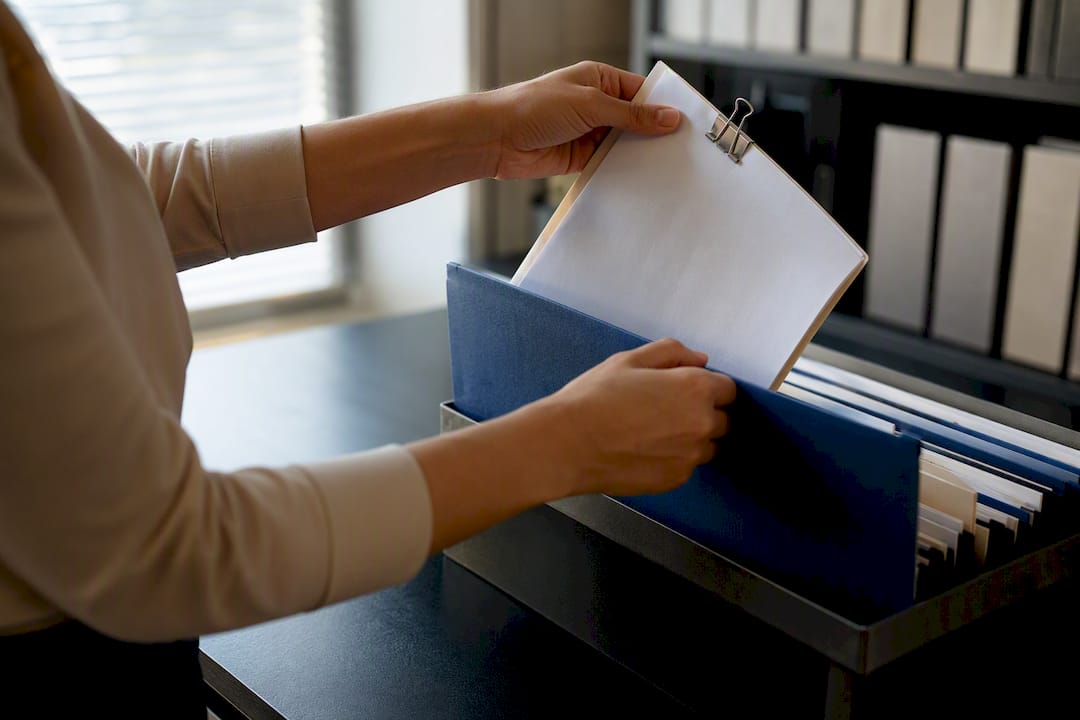
Treat a transmission report the same way you’d treat a receipt: worthless if you can’t find it later. The most durable system pairs the confirmation with the document it verifies, filed together, not scattered across separate folders or forgotten in a fax machine’s memory buffer.
For paper reports, a simple approach works: staple or clip the confirmation directly to the sent document before filing, and keep a dated folder by month or by case if you handle regular legal or administrative filings. For digital confirmations, name the PDF consistently, recipient name, date, and document type, so a search actually surfaces it months later. Many professionals keep a simple spreadsheet log alongside the PDFs: date, recipient, page count, status, and any follow-up taken, which turns a folder of scattered PDFs into something you can audit in minutes.
Retention periods depend on what you sent. Tax documents, legal filings, and contractual notices often need to be kept for several years under whatever record-retention rule applies to that document type, so match your fax confirmation retention to the same schedule as the underlying paperwork rather than treating it as a separate, shorter-lived record. If you’re preparing files for a fax and want to confirm formatting before you send, tools that convert and organize PDFs beforehand make it easier to keep the sent version and the archived confirmation consistent with each other.
When I’d Print a Report vs. Trust a Digital One
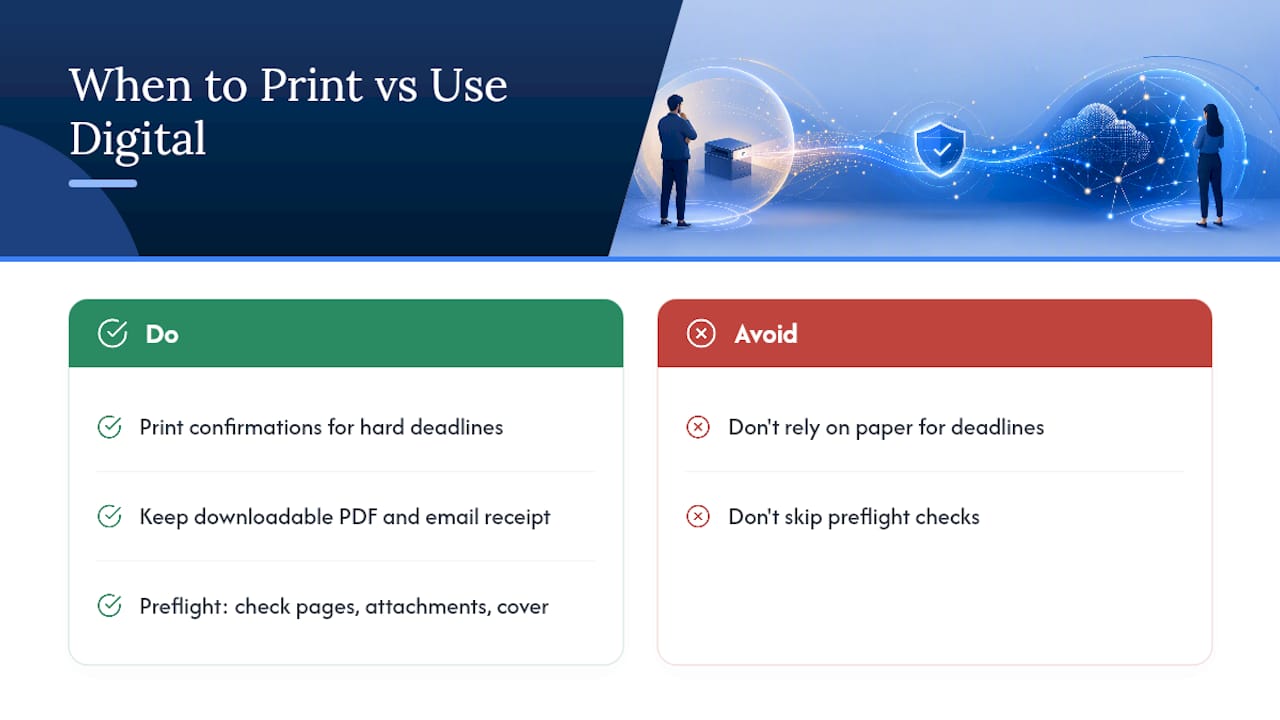
For anything with a hard legal deadline, a court filing, an IRS submission, a contract notice, I’d print the confirmation and file it with the document, full stop. The five extra seconds cost nothing against the risk of a missing record.
For routine sends, a downloadable PDF and an email receipt do the job better than paper ever did. They’re searchable, they don’t fade, and you can pull one up on your phone during a dispute. Either way, preflight your document first: check page order, confirm attachments are included, and make sure the cover sheet matches what you’re actually sending, before you worry about the confirmation at all.
— Engin
Sending Faxes Without Hardware, and Getting Proof Every Time
If you don’t own a fax machine, or don’t want to manage report settings buried three menus deep, An online fax service offers a direct path. Send a fax online with no account or subscription required. Every transmission includes delivery confirmation, automatic retries if the line is busy, and encryption in transit, and if a fax genuinely fails to deliver, that page is refunded.
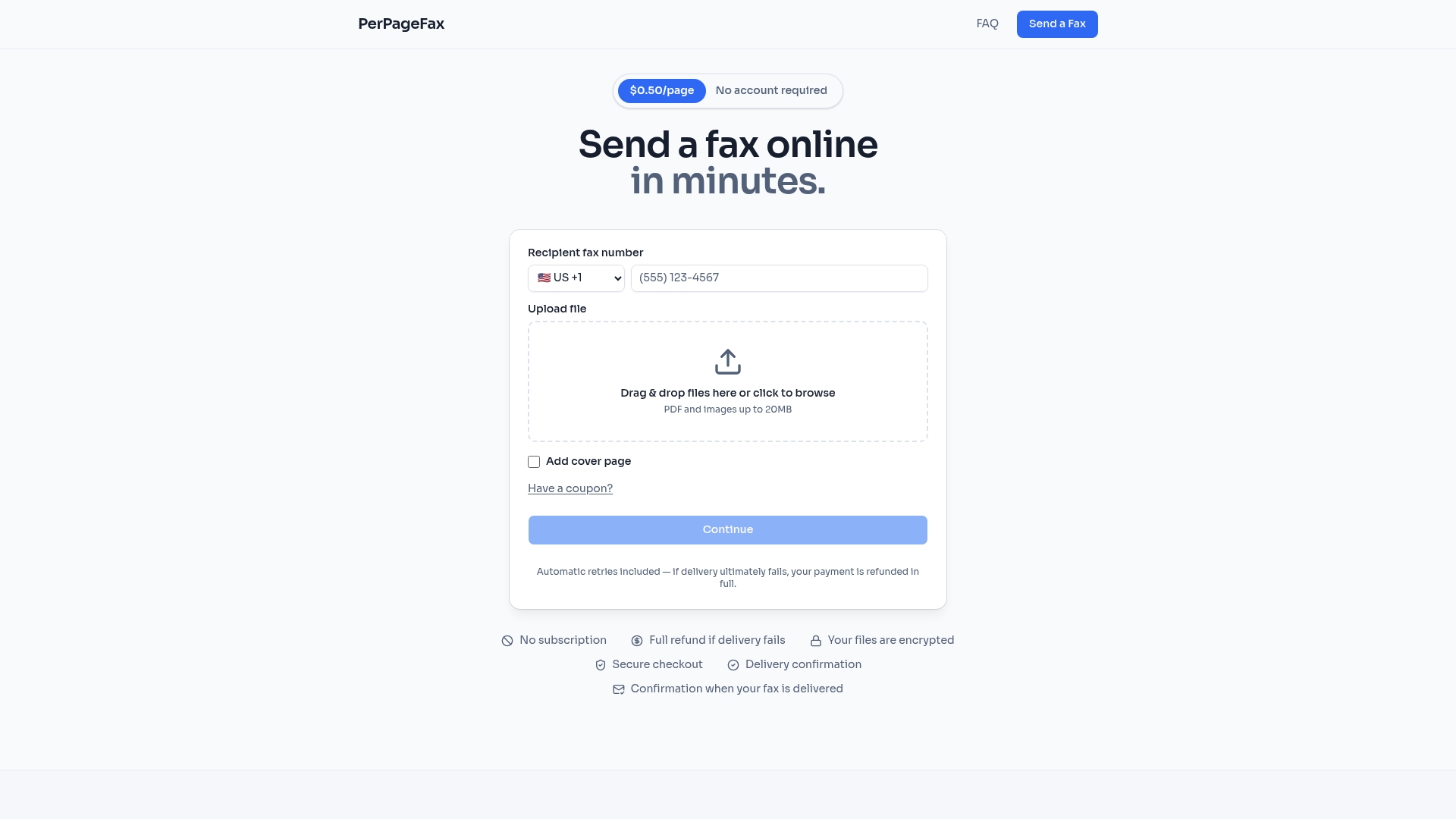
Confirmations arrive as downloadable PDFs and email receipts, ready to print or file alongside whatever document you sent, whether that’s an IRS form, a legal notice, or a signed contract. That’s a practical fit for one-off or urgent filings where you need proof fast and don’t want to buy hardware for a single send. Before you send, you can build a cover sheet or prepare your file with the free PDF tools. When you’re ready, send your fax online and get your confirmation the moment it completes.
Sources
- Print the Transmission Verification Report | Brother Support
- Fax confirmation sheet: what it proves and how to get one | LegalClarity
- Set up fax confirmation page | Ricoh KB
FAQ
What Does “Fax Transmission” Mean?
Fax transmission refers to the electronic transfer of a scanned or digital document from a sending fax machine or service to a receiving fax device over a phone line or internet connection, verified through a handshake and page-by-page data check.
What Should I Do If My Fax Transmission Failed?
Check the recipient number, confirm you’re dialing a fax line rather than a voice line, and retry, most failures involve a busy signal, a wrong number, or a line-quality issue that clears up on a second attempt. If it keeps failing, save the error report and contact the recipient directly to confirm their line is working.
How Do I Print a Fax Report?
On most machines, go to Menu → Fax → Report Setting → Transmission, then choose to view or print the last report, or set the option to “On” so every future fax generates one automatically. Online fax services let you download the same confirmation as a PDF from your sent folder or the email notification.
How Long Do Faxes Take to Transmit?
A typical one-page fax transmits in a variable amount of time depending on line quality and machine speed, with longer documents taking proportionally more time. Online fax services generally process and deliver within a similar window, though delivery confirmation may take some extra moments to appear in your dashboard or inbox.
Recommended
Ready to send a fax?
Send your fax online in minutes for $0.50/page — no account needed.
Send a fax now