
September 7, 2026
Free Colorado Vehicle Bill of Sale Form 2026
You've just agreed to buy or sell a vehicle privately in Colorado. The payment is arranged, the keys are ready, and then someone asks for the bill of sale. A quick internet search produces several generic templates, but choosing the wrong document can create problems when the title, odometer disclosure, or registration paperwork doesn't line up.
A Colorado vehicle bill of sale form is more than a receipt. It records the parties, vehicle, price, date, and terms, while certain transactions require Colorado's controlled DR 2173 Motor Vehicle Bill of Sale rather than an ordinary printable template. The safest approach is to match the document to the title situation before anyone signs.
Why a Bill of Sale is Crucial in Colorado
A private vehicle sale often happens in a driveway, parking lot, or after a short exchange of messages. That informal setting makes a written record especially important. The bill of sale identifies who sold the vehicle, who bought it, which vehicle changed hands, and what terms applied.
Colorado's official buying and selling guidance explains that a bill of sale can support odometer disclosure on the DR 2173 form. The same guidance also says a separate bill of sale may not be necessary when the title itself already contains the sale information. That means the document's usefulness depends on what the title contains and what the buyer needs for the transfer.
What the document proves
The bill of sale gives both parties a dated record of the transaction. If the buyer later needs to show the purchase terms during registration, the document can help connect the vehicle to the sale. If the seller needs to clarify when the vehicle left their possession, a signed copy provides useful evidence of the handoff.
It also helps resolve ordinary disagreements. A written price is clearer than a text-message summary. A recorded VIN is more reliable than a listing description. A stated condition, payment arrangement, and transfer date reduce the chance that each party remembers the deal differently.
Practical rule: Complete the paperwork while both parties are present, before handing over the keys.
Why a generic receipt can fail
A generic receipt may omit the fields Colorado or the county clerk needs. It might not provide enough room for odometer information, may not match the title status, or may be unsuitable where the secure DR 2173 is required. The seller can then face questions about the sale record, while the buyer may have to correct paperwork before registration or title transfer.
A bill of sale also doesn't replace the title process. Treat it as one part of the closing file, alongside the properly completed title and any other documents the transaction requires.
Download Your Colorado Vehicle Bill of Sale Template
For a private sale, a Colorado vehicle bill of sale template in PDF format can organize the transaction details in one place. Complete it against the title and the vehicle, then give the buyer and seller a signed copy before the handoff.
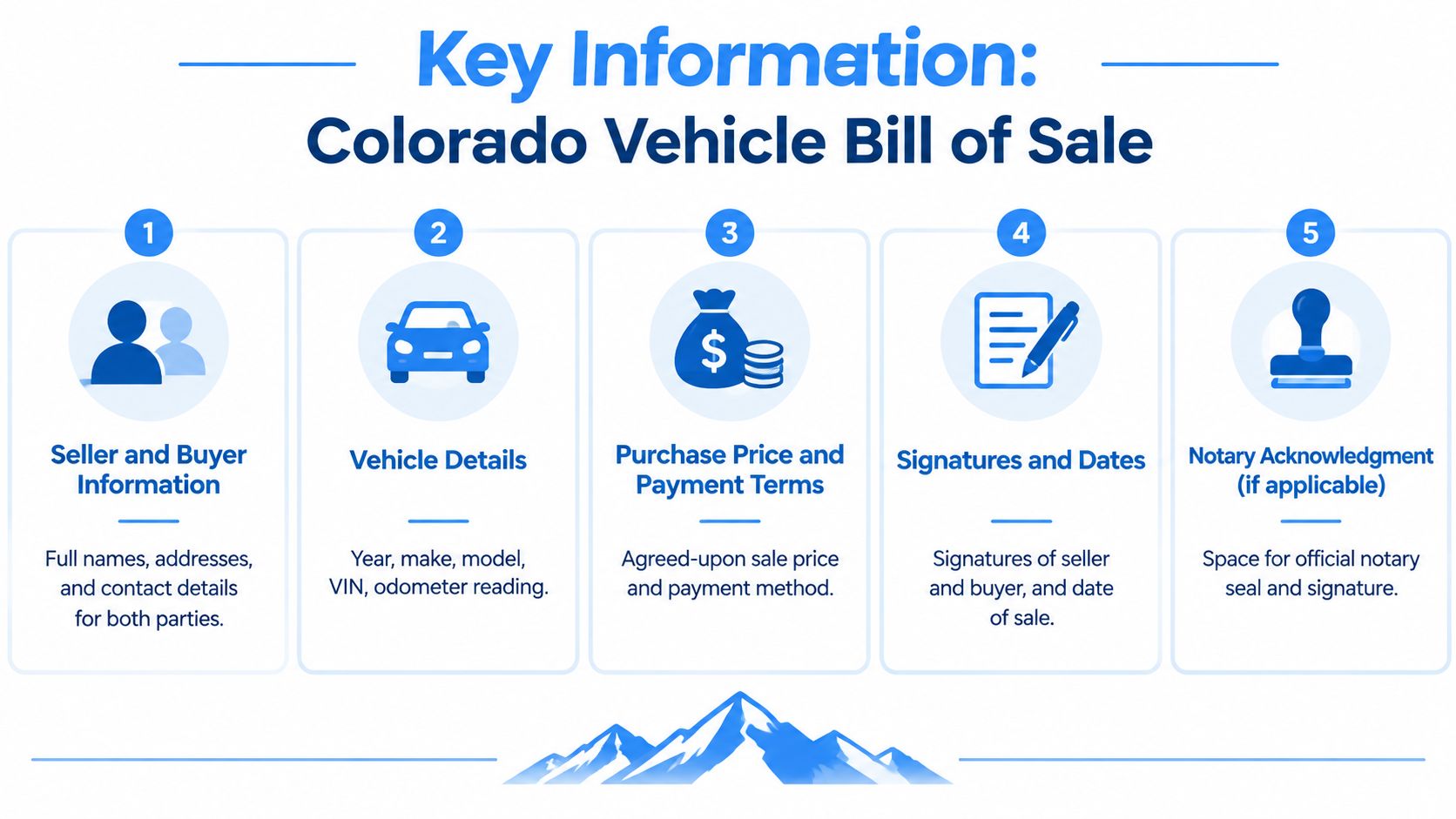
Choose a template that provides space for the parties' names and addresses, vehicle identifiers, odometer information where required, sale terms, payment details, signatures, and dates. Those fields create a usable record for a straightforward transaction. They do not replace Colorado's secure DR 2173 when that official form is required.
Check the title before printing. If it already contains the required sale information, Colorado guidance indicates that a separate bill of sale may not be needed. If the title has no room for an odometer disclosure, or the buyer must drive before registration under the applicable circumstances, use the official form rather than relying on a generic template. A simple form can support the file, but it cannot correct missing title or DMV paperwork.
Key Information Required on the Form
A bill of sale works only when the information can be matched to the actual transaction. Complete it from the title and the vehicle itself, not from an old listing or memory.
Seller and buyer information
Write each party's full legal name and current address. If more than one person appears as an owner or buyer, don't leave anyone out. Use the names that belong on the transaction documents, rather than nicknames or shortened versions.
Include contact information when the template provides space. It can help the parties resolve a missing signature, payment question, or registration issue without searching through old messages. The buyer and seller should review these fields before signing because correcting a signed document can be harder than completing it properly the first time.
Vehicle description and identification
Record the vehicle's year, make, model, and VIN. The VIN must match the title and the vehicle exactly. Check the VIN from the vehicle identification plate or other reliable vehicle location, then compare it character by character with the title.
A single mistaken character can connect the bill of sale to the wrong vehicle record. For a practical explanation of the VIN structure and where to verify it, use Vektracer's VIN reading guide. Don't copy the number from an old advertisement if the title or vehicle shows something different.
Add other identifying fields when the form includes them, such as body style, color, plate information, or title information. These details aren't a reason to guess. If you're unsure whether a field applies, verify it with the title records or the office handling the transfer.
Transaction details and sale terms
State the actual sale price, not an estimate or an amount chosen for convenience. The buyer may need the price for registration and tax processing, and both parties should have the same figure on every related document.
Write the date the transaction takes place and describe the payment arrangement accurately. If payment is complete, say so only after it has cleared or has otherwise been confirmed. If money remains due, record that arrangement instead of describing the vehicle as fully paid.
Include the odometer reading when the transaction requires it. Use the exact reading shown on the vehicle. Don't round, guess, or leave the field blank because the number seems obvious.
A condition statement can also prevent confusion. If the vehicle is being sold without a seller warranty, state that clearly. List known issues that the parties have discussed, such as visible damage or a mechanical warning, rather than relying entirely on a conversation that may be forgotten later.
The Official Colorado DR 2173 Form Explained
The DR 2173 Motor Vehicle Bill of Sale is different from a basic downloadable template. Colorado treats the form as a controlled document in the situations where it is used for specific sale and odometer purposes. The official DMV guidance identifies approved vendors for the secure version, so a homemade reproduction shouldn't be treated as an equivalent replacement.
Colorado also maintains separate numbered forms for different title situations. DR 2173 is used for general motor-vehicle bill of sale purposes, while DR 2116 relates to a purged Colorado title record. The correct form depends on the vehicle's title status and the record required for the transfer.
When DR 2173 becomes important
Independent Colorado bill-of-sale guidance identifies situations in which a motor vehicle bill of sale is required, including when the buyer needs to drive the vehicle before registration because the purchase occurred after hours. It also identifies the situation where the title has no space to record the odometer reading.
In that odometer situation, the seller must use the state-approved DR 2173 through an authorized vendor. A generic form may still be useful as an extra transaction record, but it shouldn't replace the required secure document.
The practical decision is simple:
- If the title contains the necessary sale information and no separate document is needed, follow the title and county instructions.
- If you need a general supporting record for a straightforward transaction, a complete template may be useful.
- If the title lacks room for the odometer disclosure or the buyer must drive before registration under the applicable circumstances, obtain the secure DR 2173 from an approved vendor.
The form name matters because Colorado doesn't treat “bill of sale” as one universal document.
Keep the form source in your closing notes. If you need to transmit paperwork to an office, first confirm its accepted delivery method and fax details using a reliable guide to finding a business or government fax number.
Correctly Signing and Finalizing the Document
Finish the form before the vehicle changes hands. The buyer and seller should review the names, VIN, price, date, odometer information, and condition terms together. Corrections should be made before signing, not written over an unclear entry afterward.
A clean signing sequence
- The seller checks the title and vehicle identifiers against the bill of sale.
- The buyer reviews the price, payment terms, condition, and odometer entry.
- Both parties sign in the designated spaces.
- Both parties add the actual signing or sale date requested by the document.
- Each person receives a complete copy, including any required supporting pages.
Use the same version for both copies. A photograph or scan can help preserve the record, but keep the signed original in a safe place when possible.
Does Colorado require notarization?
For a standard private vehicle bill of sale, notarization generally isn't required. Colorado guidance distinguishes that ordinary private-sale document from certain county clerk forms that may be titled as notarized bill of sale documents for local administrative purposes. The important compliance question is whether the document contains the transaction details and any required odometer disclosure.
That distinction doesn't mean every transaction has identical paperwork. If a county office, title situation, or specific transaction instruction calls for a notary, follow that instruction rather than assuming the general rule applies. For a signed document you need to scan or transmit from a phone, these methods for creating a PDF on an iPhone can help preserve a readable copy.
How to Send Your Completed Bill of Sale
After signing, decide who needs the document and which version each person should retain. The buyer may need it for registration or title processing. The seller should keep a signed copy with payment records, messages, and the completed title paperwork.
A lienholder or another administrative party may also request a copy, but don't send personal documents to an unverified number or address. Confirm the receiving office's instructions first, including whether it accepts a bill of sale by fax, upload, mail, or in-person delivery.
Sending a clear copy
Scan the completed form or photograph it in good light. Make sure all corners are visible, signatures are legible, and no page is cropped. Save the file with a useful name that identifies the document without exposing unnecessary personal information.
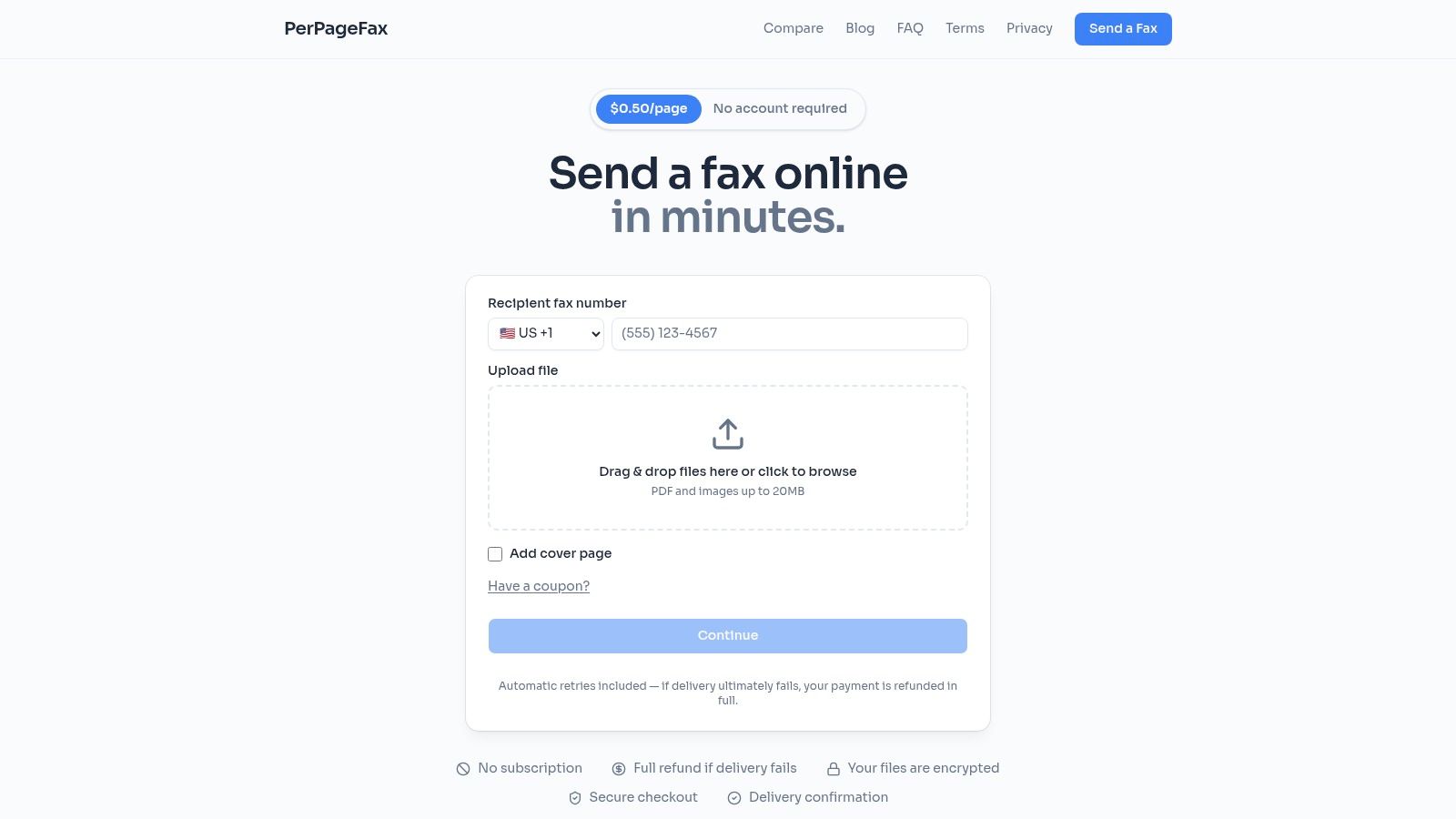
If the receiving office accepts fax, an online service can transmit the PDF or image from a computer or mobile device. The guide to sending an online fax explains the general process, including preparing the file, entering the destination, and retaining delivery confirmation.
Keep a transmission record
Save the sent file, confirmation page, and any status information. A delivery confirmation shows that the transmission was reported as successful, but it doesn't prove that an office approved the registration or completed the title transfer. Keep following up through the recipient's official process if the buyer's registration depends on the submission.
For a private sale, the best closing file includes:
- Buyer copy: A complete signed bill of sale for registration and personal records.
- Seller copy: The signed document, title records, payment proof, and sale communications.
- Transmission proof: A saved confirmation when the document was faxed or electronically delivered.
- Follow-up notes: Any response from the county clerk, DMV, or lienholder.
Common Mistakes to Avoid
Most paperwork problems come from small inconsistencies, not complicated legal issues. Use this final review before either party leaves with the vehicle.
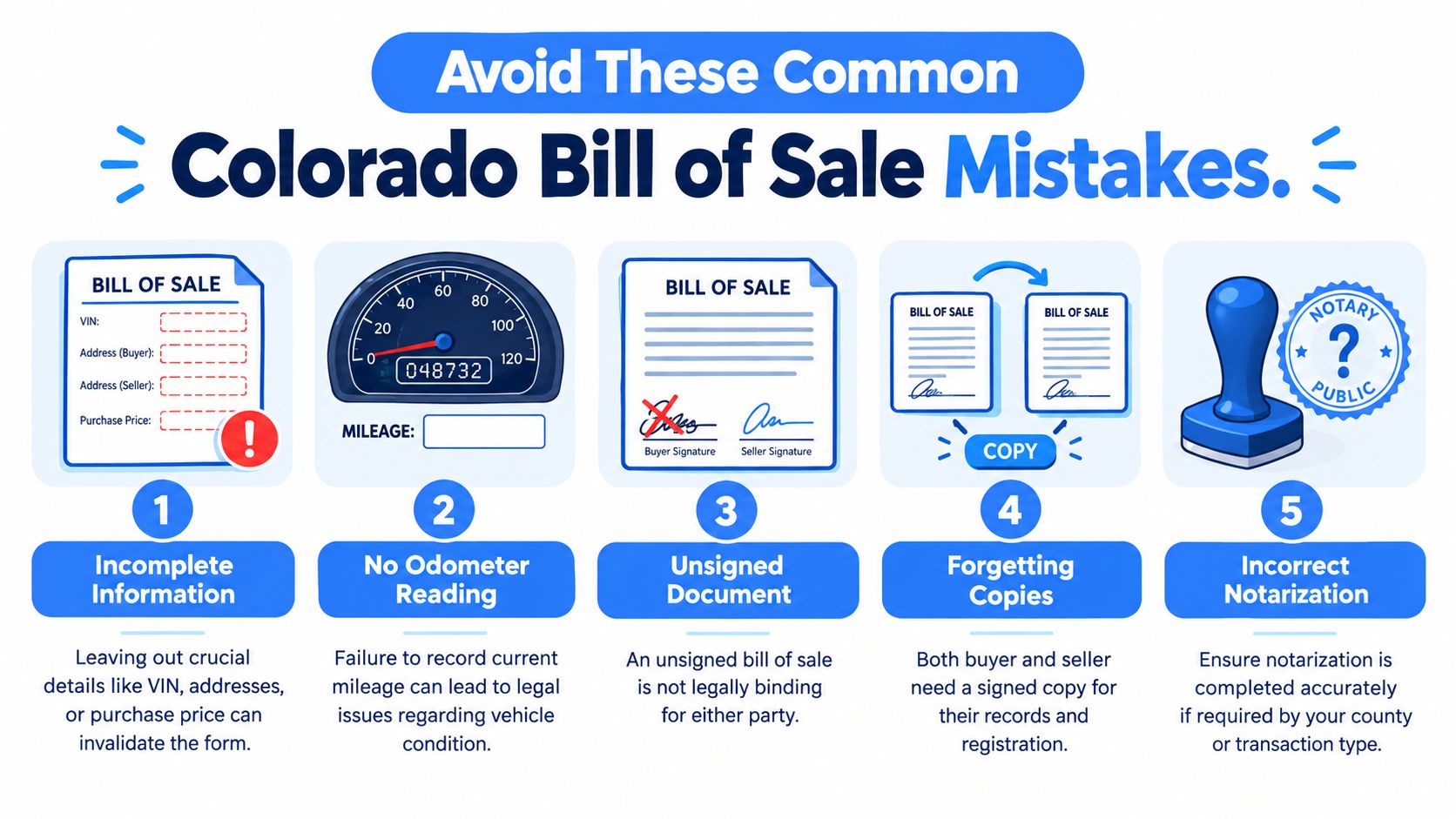
- Incorrect VIN: Compare the VIN on the vehicle, title, and bill of sale. Don't rely on a listing, text message, or memory.
- Incomplete odometer information: Enter the exact reading when disclosure is required. If the title has no space, stop and confirm whether the secure DR 2173 is needed.
- Missing signatures or dates: An unsigned or undated document may not establish the transaction clearly. Have both parties sign before the handoff.
- Unclear condition language: If the vehicle is sold without a warranty, write that plainly and record known issues. Don't assume a verbal “as-is” discussion will be enough.
- Wrong form: A generic template doesn't replace DR 2173 when Colorado's specific requirements apply. Check the title situation and obtain the secure form through an approved vendor when necessary.
- No copies: Give the buyer and seller matching signed copies. Keep a scan or photograph in a secure location as a backup.
- Unverified delivery details: Before faxing or sending paperwork, confirm the recipient's official instructions and destination. A successful transmission to the wrong number won't solve the registration problem.
Final check: The names, VIN, odometer information, price, date, signatures, and form type should all describe the same transaction.
If you need to send a signed Colorado vehicle bill of sale to a DMV office, county clerk, lienholder, or another verified recipient, PerPageFax lets you upload a PDF or phone image without a fax machine or subscription. Send the completed paperwork online, then save the transmission status and confirmation with your vehicle-sale records.
Ready to send a fax?
Send your fax online in minutes for $0.50/page — no account needed.
Send a fax now